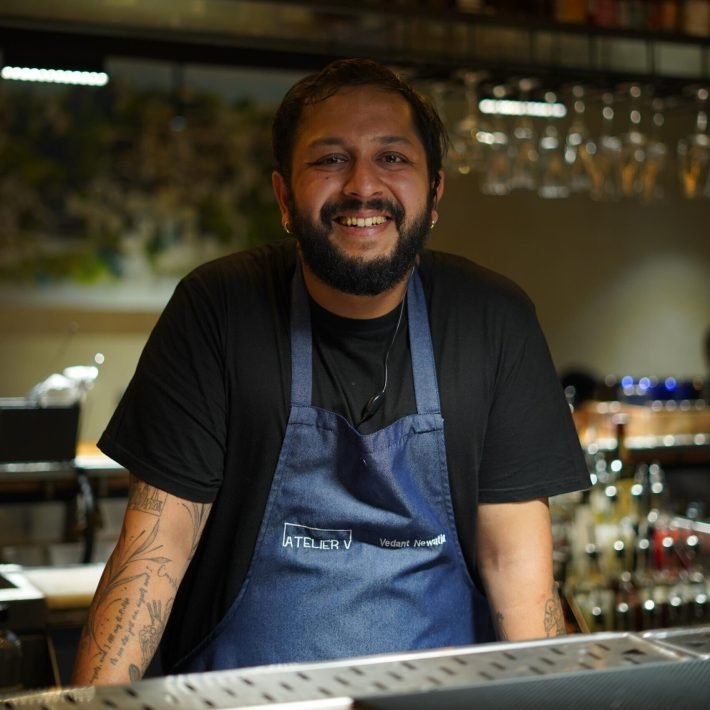

He Cooked. She Held. Together, They Became Home — The Journey of Nitin and Arati Bhogale.
Some stories are built in kitchens. Some are built in silence. And some are built so gently that only years later do you realise how much they held.
The story of Nitin Bhogale and Arati Bhogale is one of discipline, migration, resilience and love expressed through work. From the rigorous worlds of The Oberoi and Welcomgroup to rebuilding life in Australia during a recession, they did not merely create restaurants. They created reassurance. A kind of food memory that stayed long after the plate was cleared.
Together, they brought different strengths to a shared journey. Nitin Bhogale became known for his instinctive understanding of flavour, consistency and guest comfort, creating food that was both exact and deeply personal. Arati Bhogale became the quiet force behind structure, operations, people and scale, holding together home, work and growth with remarkable steadiness. Their ventures in Australia — The Indus, Desi Dragon and Kaali Gourmet — reflected not just entrepreneurial success, but a philosophy: Authenticity without compromise, systems without stiffness, and hospitality without show.
Today, as they return to India with consultancy, concept development, menu engineering and The Gourmet Food Atlas, they are bringing back more than experience. They are bringing back a way of thinking — one that balances heart with process, memory with profitability, and soul with sustainability.
A tête-à-tête with the power couple who blended their diverse personas into an aromatic intercontinental success story.
You began your careers at institutions like The Oberoi and Welcomgroup at a time when hospitality was built on rigour, not glamour. What stayed with you from those early years?
Nitin Bhogale: What stayed with me was the discipline that entered your bones. At The Oberoi, I learnt very early that a kitchen is not held together by talent alone. Talent can impress once. Systems sustain for years. I went on to become Executive Sous Chef, and that journey taught me precision, consistency and respect for the craft. Every plate had to be right. Every time. Not when it suited you. Not when the pressure was low. Every time. That thinking never left me.
Even today, when I walk into a kitchen, I first look at structure. If the system is weak, the food will eventually weaken too.

Arati Bhogale: For me, those early years taught me something slightly different, but equally important. At Welcomgroup, and later at IHM Mumbai, I learnt how much hospitality depends on what people do not see. Process. Discipline. Timing. People management. Calm under pressure. Hospitality is often misunderstood as glamour. It is not. It is constantly holding.
Those years gave me grounding. They taught me that if you want to build anything lasting, you must understand both the visible and the invisible work behind it.
In 1990, you moved to Brisbane with a five-year-old child during a recession. What did those first days feel like — not as professionals, but as a family?
Nitin Bhogale: It felt quiet. Not dramatic. Just very quiet. A new country strips away familiarity. Suddenly, nobody knows your name, your journey, or your past. All you have is your skill. I did not allow myself too much time to think. I stepped out and found work at Sheraton Brisbane within days. For me, the kitchen has always been a place where uncertainty is reduced. Once I was back in a working kitchen, I knew I could rebuild.
Arati Bhogale: For me, it felt heavier. Because while Nitin could step into the kitchen and find his rhythm, I was holding the emotional centre of the move. We had a five-year-old son. A new country. A recession. No support system. There is a loneliness in migration that people do not speak about enough. It is not loud. It just sits with you. So I built life in small units. Routine. Stability. A meal. A timetable. A home that did not feel uncertain, even if everything outside it was.
Later, I built and ran a food manufacturing unit in Brisbane that supplied Sheraton, Hilton, ANA Hotels and Queensland Parliament House. But in those first days, I was not thinking of building something big. I was thinking of keeping us steady.
At Sheraton Brisbane, your journey crossed paths with the Indian cricket team. But somewhere, it stopped being hospitality and became something far more personal. How did that happen?
Nitin Bhogale: It happened quietly. At Sheraton, I had started making wood-fired pizzas that suited Harsha Bhogle’s taste. Not heavy. Not loud. Balanced. Thought through.
He noticed. But alongside that came something deeper. The team began asking for simple Indian food like amti bhaat and dal. Food that felt like home. That told me everything. When people are away from home too long, they don’t miss variety. They miss familiarity. So I stopped cooking like a hotel chef. I began cooking like I would for family.
Years later, Harsha came to Australia on a government tour and visited Kaali Gourmet. It was a different time, a different space. But the moment he ate, something returned. He came back again. And again. That stayed with me. Because it meant the memory had travelled.
Later, on a podcast, he called me his “cousin from down under.” That is the kind of respect you don’t chase. It comes back to you.
Arati Bhogale: For me, it changed when they came home. Not as cricketers. Just as young boys, far from home. They sat easily. Ate freely. Laughed without guard. And then one of them asked if we could wash his kit.
We said yes. What came next was jerseys, whites, socks, pads, everything. Our backyard was full. And I remember sitting there with my son, guarding those kits as they dried. Making sure nothing fell and nothing got lost. Because those were not just clothes, that was their next day.

We never charged a single penny, not for food, not for washing, not for anything. Because some things are not business, they are simply human.
Out of those years came your restaurant journey in Australia — The Indus, Desi Dragon, Kaali Gourmet. What did each space allow you to express?
Nitin Bhogale: Each restaurant reflected a different part of my thinking. At The Indus, it was about authentic Indian food with clarity and freshness. At Desi Dragon, it was bold Indo-Chinese with identity. At Kaali Gourmet, it became more refined. A destination. But one thing never changed. No shortcuts. Fresh food. Every day. If honesty leaves the kitchen, the guest feels it.
Arati Bhogale: And I ensured the experience matched the food. Every space needed its own rhythm. Its own system. I handled operations, teams, and structure. Because a good idea may attract people, but only a strong system keeps them coming back.
As partners in life and business, how did your strengths complement each other?
Nitin Bhogale: I stayed with the food. Flavour. Discipline. Consistency.
Arati Bhogale: And I held everything around it. People. Process. Sustainability
We didn’t try to be the same. That’s why it worked.
Now that you are back in India, what are you bringing with you?
Nitin Bhogale: Discipline. Kitchens need stronger systems. I want to help build that.
Arati Bhogale: Structure. Through consultancy and The Gourmet Food Atlas, we want to build businesses that last.

After everything, what stays with you?
Nitin Bhogale: A guest returning. That means everything.
Arati Bhogale: A feeling. If they remember how they felt, we’ve done our job.
And perhaps that is what defines them.
Not the restaurants. Not the years. But the fact that somewhere in Brisbane, a chef cooked food that stayed in memory. That years later, a man returned to Kaali Gourmet and kept coming back. That a podcast would carry that bond forward. And that in a quiet backyard, a mother and son once guarded cricket kits like they were holding something sacred. That is not just hospitality. That is love, in working clothes