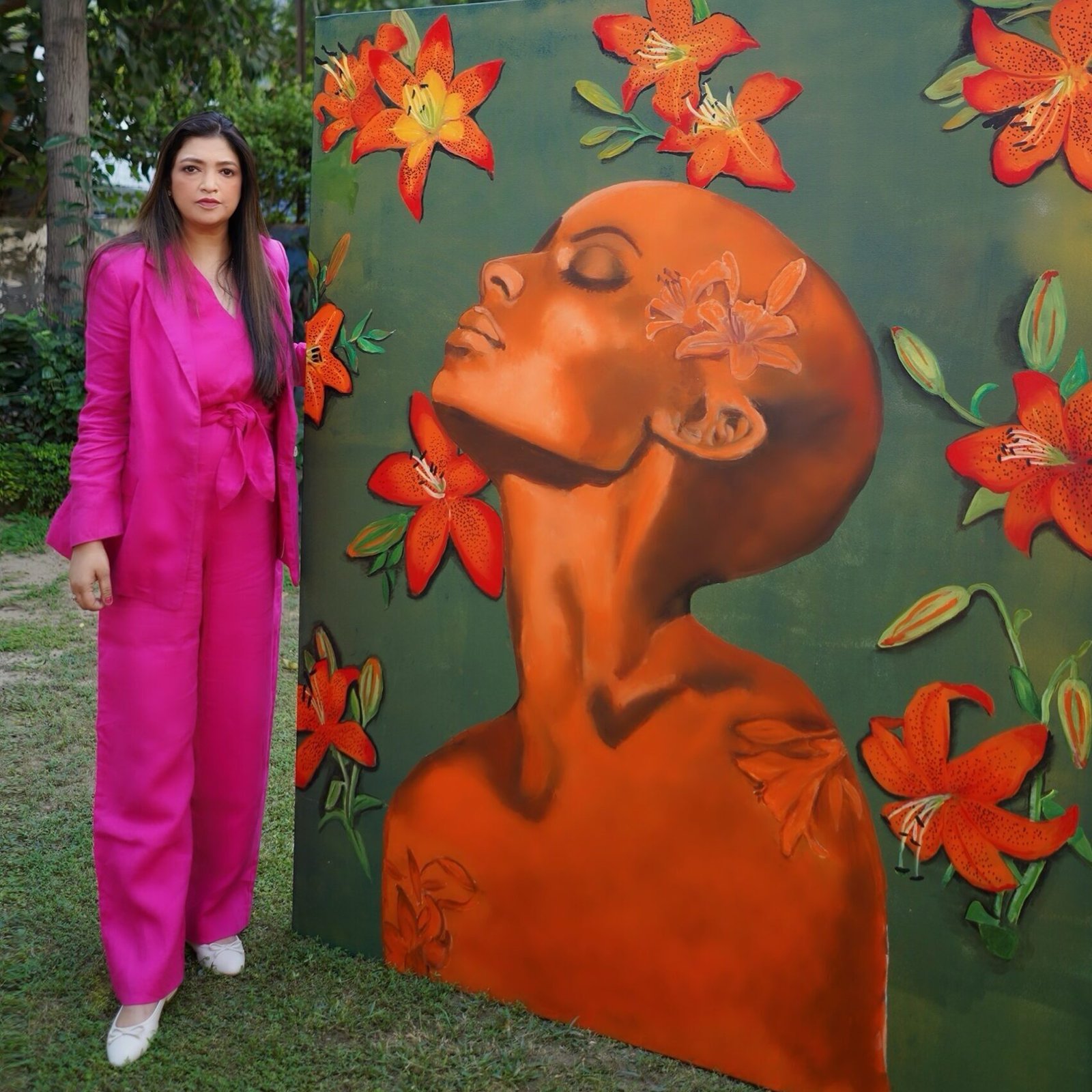
Guided by mindfulness, memory, and nature, Rakhi Poddar shows Amber Dias how spirituality and self-reflection shape her evolving visual language.
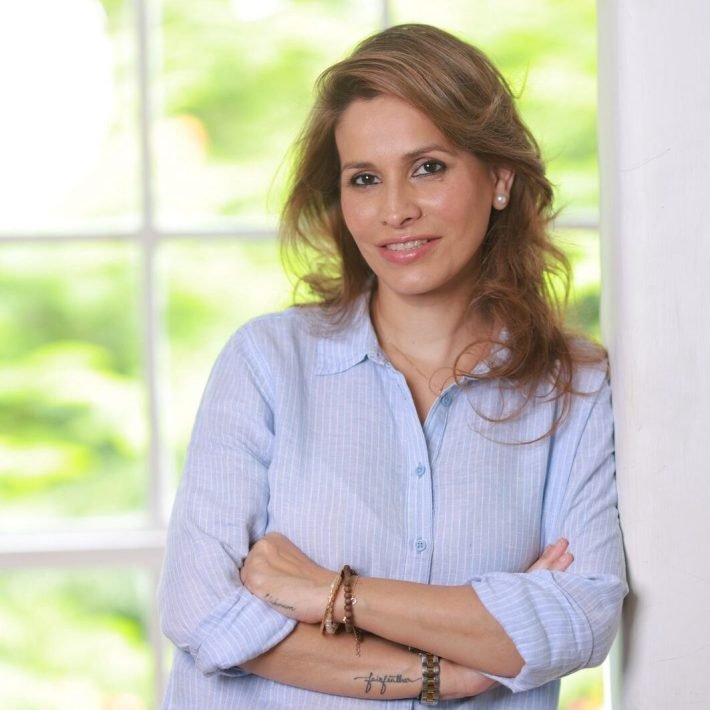
Rooted in childhood creativity and shaped by spiritual reflection, Rakhi Poddar’s journey is one of rediscovery and quiet transformation. Through vibrant colours and meditative forms, her work explores inner strength, emotion, and the untapped potential within every individual.
Excerpts from the interview…
When did you realise that art was becoming more than just a hobby for you?
I was drawn to art from early childhood, beginning with making rangoli for Diwali. Gradually, those patterns transformed into faces, especially female faces, which fascinated me deeply. I found myself naturally drawn to charcoal, and soon pencil became my medium of expression. By the time I was in sixth or seventh grade, I was sketching portraits and figurative works purely from observation, without any formal training or guidance. Creating deep, expressive eyes became instinctive to me, and through this process, I realised that art was no longer just a hobby, it had become my way of understanding and expressing the world.
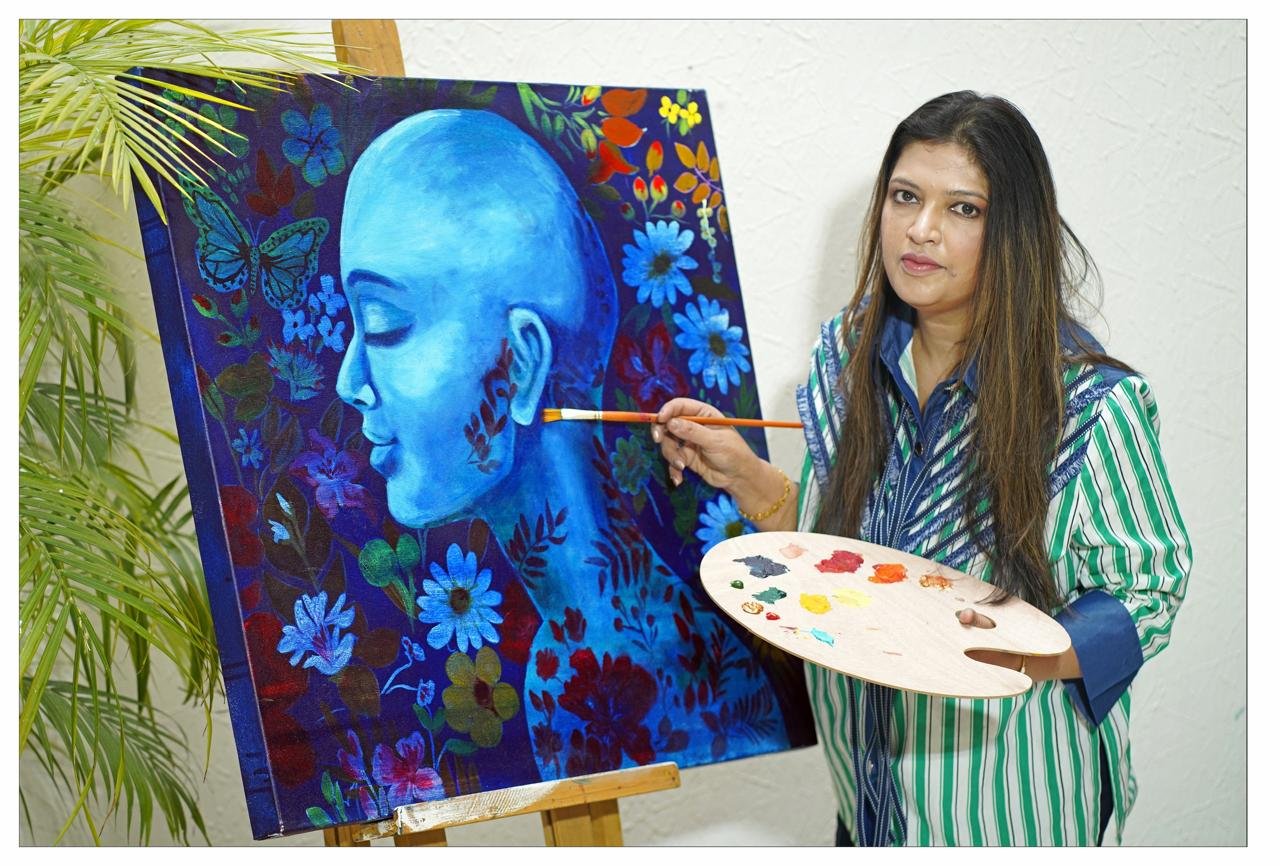
Your mother’s influence shaped not only your appreciation of art but also your understanding of discipline and precision. How did her example shape your artistic mindset and work ethic?
From my earliest years, my mother was my first silent teacher. She prepared colours for my Diwali rangoli and encouraged me to create freely, never worrying if I spoiled a wall or made a mistake. I was allowed to paint whatever inspired me — from Lakshmi and Ganesh to figures from my imagination — and that freedom built my confidence as an artist. At the same time, her disciplined life and carefully drawn science diagrams taught me precision and structure. Watching her quiet strength also shaped my instinct to portray strong women, and she naturally became my first muse.
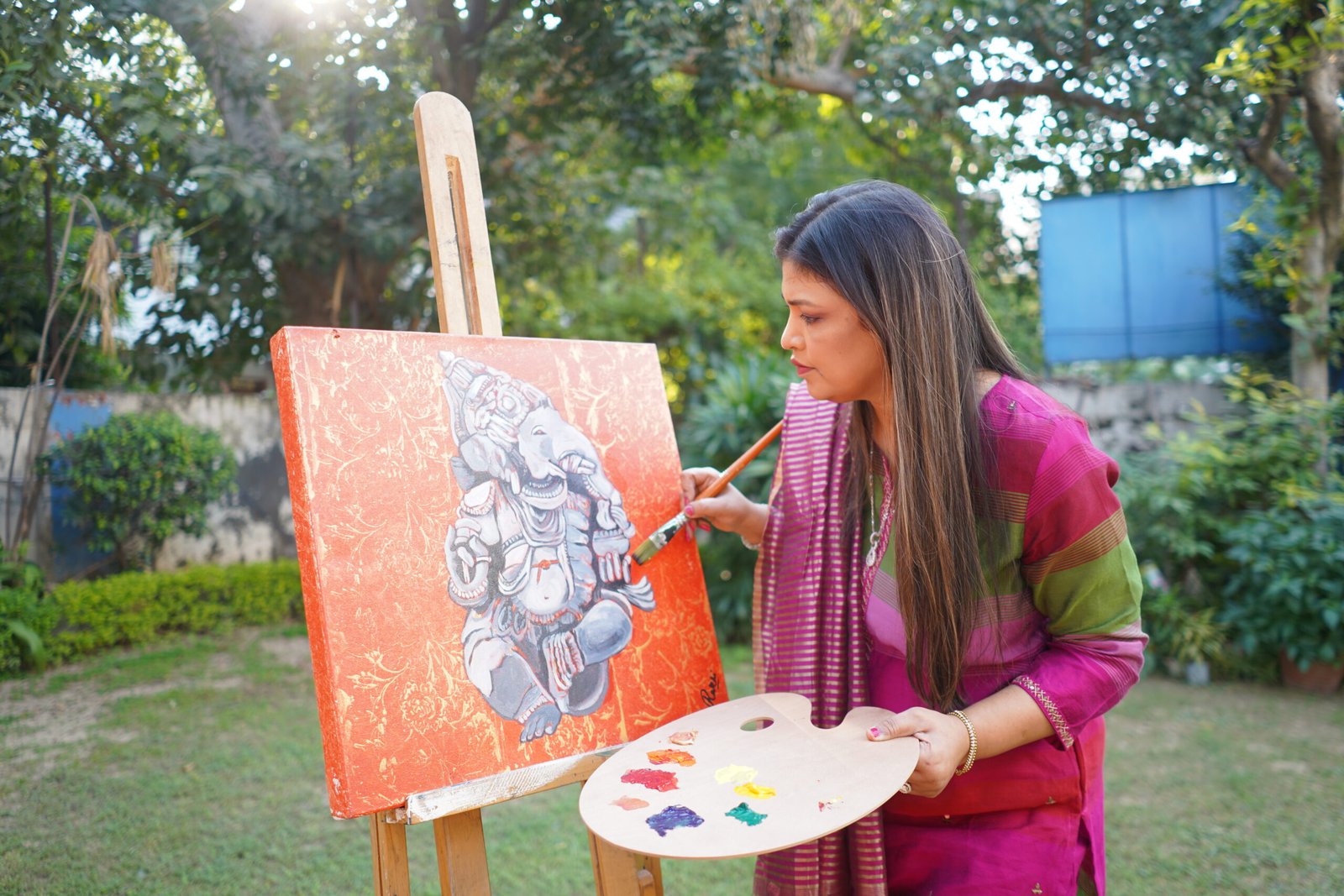
What was the emotional and creative process of returning to art after a hiatus?
Coming back to art after a break was deeply emotional. At first, I felt unsure and worried whether I could still connect with it in the same way. But as I began creating again, the connection returned naturally. Art became a space for healing and reflection.
The experience changed my relationship with my practice. I became more patient and present, focusing less on the final outcome and more on the act of creating itself. Today, painting feels like a quiet, daily ritual; a moment of peace, introspection, and self-discovery.
In what ways has your faith influenced your themes, creative process, and the energy you hope your paintings convey?
My spiritual practice has brought deeper meaning and intention to my art. As a practitioner of Buddhism, my faith and painting are closely connected, shaping the themes I explore. I am often drawn to human faces and forms because they reflect emotion, resilience, and untapped potential. When I paint, I work with mindfulness, allowing thoughts and feelings to settle calmly onto the canvas. The teachings of the Lotus Sutra inspire me deeply, especially the idea that beauty and growth can emerge even in difficult circumstances, like a lotus rising from muddy water. Through my work, I hope to inspire strength and self-belief.
How would you describe the evolution of your visual language?
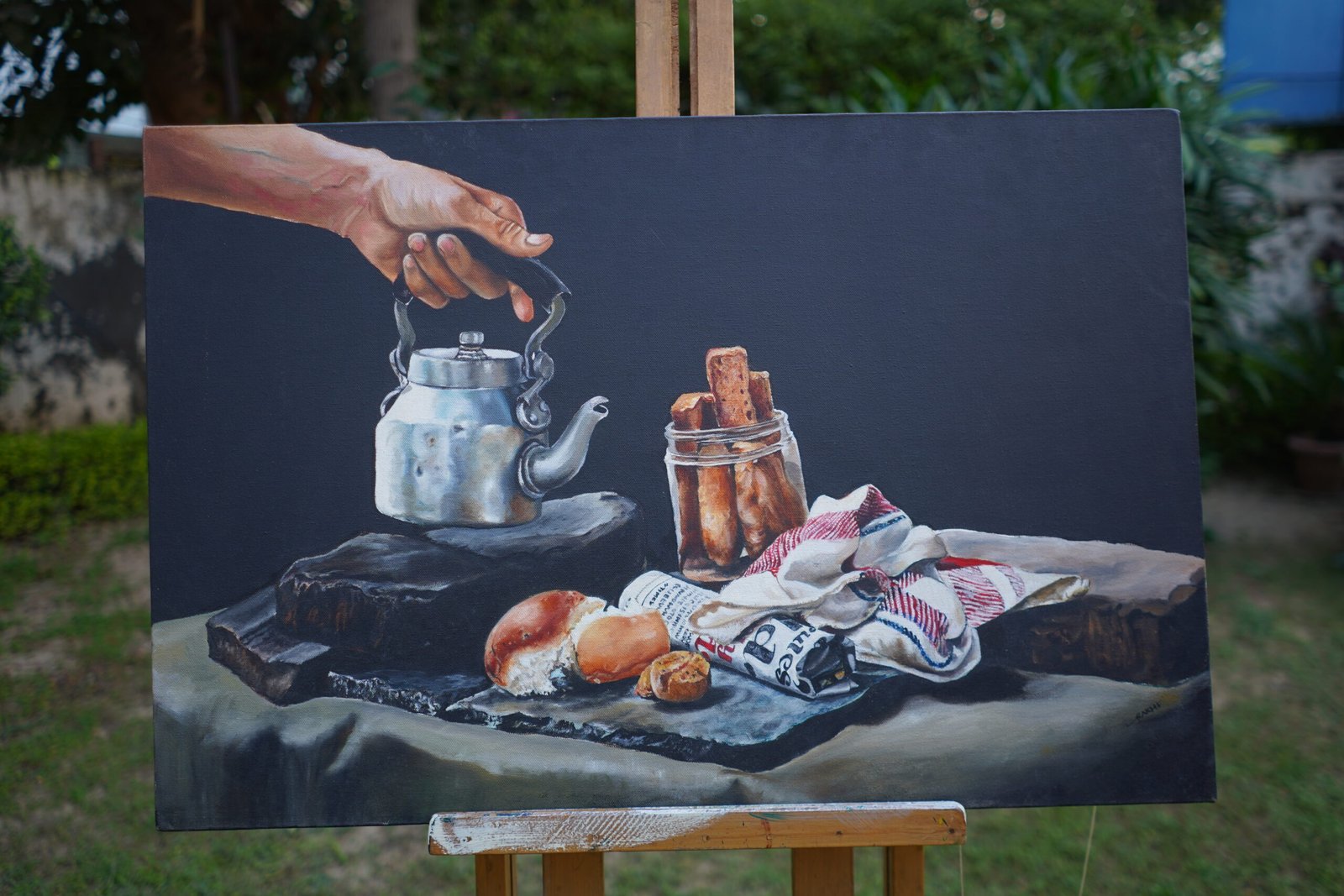
My visual language has evolved alongside my inner journey. In the beginning, my work was intuitive and emotion-driven. Over time, as my spiritual practice deepened and my connection with nature grew stronger, my colours became more vibrant and intentional, carrying energy and emotion rather than serving as decoration. Nature-inspired forms and meditative rhythms gradually entered my work, helping me balance movement with stillness. This evolution has made my paintings quieter yet more powerful, inviting viewers to pause, reflect, and connect with the deeper potential that exists within themselves.
Having navigated pauses, self-doubt, and rediscovery, what guidance would you offer to emerging artists?
I would tell emerging artists this: A pause is not a failure, it is preparation. Creativity doesn’t disappear when you step away; it quietly gathers depth and life experience. Don’t rush to “find” your voice, your voice already exists and reveals itself through honesty and patience. Self-doubt will appear, but it often means you care deeply about your work. Create even when you feel uncertain, not to impress others but to understand yourself. Let your experiences guide you, and trust the quiet pull that keeps bringing you back to art. Confidence grows from courage, not perfection.