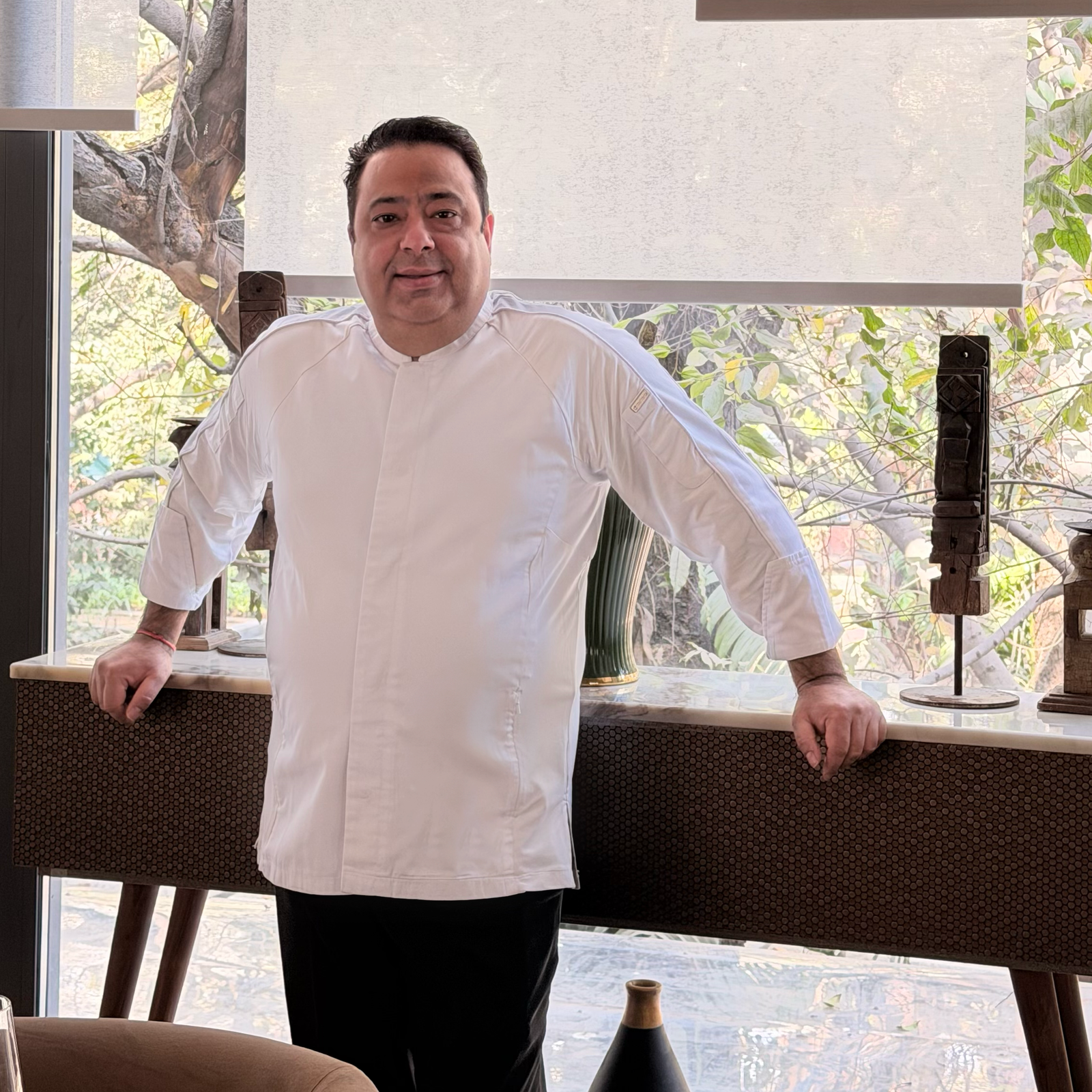
For Chef Manish Mehrotra, food has always been about identity and emotion. He discusses evolution, leadership, and the quiet confidence shaping his newest chapter.
By Amber Dias
Few chefs have shaped modern Indian cuisine as decisively as Manish Mehrotra. Widely credited with redefining contemporary Indian dining, he earned global acclaim as the longtime culinary force behind Indian Accent, which consistently featured on prestigious international restaurant lists and helped place progressive Indian cuisine firmly on the world map. Known for marrying deep-rooted Indian flavours with refined global techniques, his food balances nostalgia with precision, restraint with imagination.
Over the years, his approach has come to represent a larger shift in how Indian cuisine is perceived globally, not as a monolith, but as a layered, evolving narrative. His ability to reinterpret familiar dishes without stripping them of their emotional core has earned him both critical respect and a fiercely loyal following. Beyond accolades, it is this balance of integrity and innovation that defines his culinary voice.
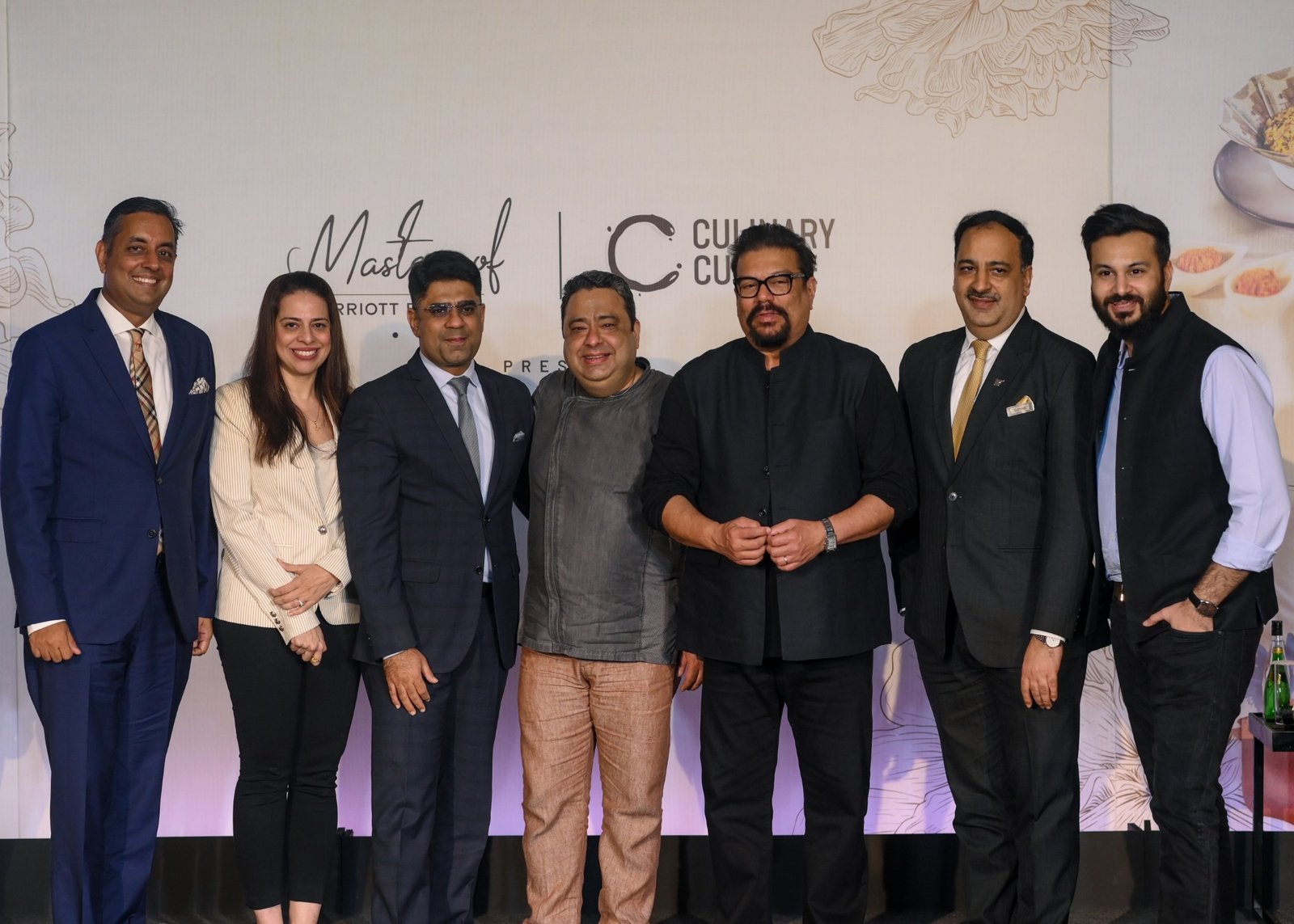
With his newest venture, Nisaba, Mehrotra enters a more personal, reflective chapter, one that distills decades of experience into food that is thoughtful, seasonal, and quietly confident. In this conversation, he looks back at his journey, his philosophy, and what continues to drive him forward.
Excerpts from the interview…
You’ve been at the forefront of modern Indian dining for decades, shaping how the world experiences Indian cuisine. Take us back to the beginning. How did your culinary journey start, and what first sparked your passion for food? What made you realise this was the path you wanted to commit to?
Honestly, it wasn’t some dramatic moment. I grew up in a home where food was important; it was how people connected. After hotel management, I naturally found myself drawn to the kitchen. What really pulled me in was the idea that food could say something about who you are, where you come from. Over time, I realised this wasn’t just a job. This was something I wanted to commit my life to.
How has your relationship with food changed over the years?
In the beginning, it was all about technique, learning the rules, getting things right. Today, it’s far more instinctive. I think a lot more about balance, restraint, and clarity. You learn that not everything needs to be complicated. Sometimes the most powerful dishes are the simplest ones.
Your work beautifully balances tradition with innovation. How do you honour India’s rich culinary heritage while still pushing boundaries and reimagining what Indian cuisine can be?
For me, innovation only works if it comes from respect. You can’t reinvent Indian food unless you truly understand it. Our cuisine is incredibly layered, regionally, culturally, and emotionally. I spend a lot of time understanding those roots and then interpreting them in a way that feels relevant today. It’s not about changing for the sake of it – it’s about evolving naturally and finding the right fit.
What continues to inspire you creatively? How do you nurture originality, discipline, and confidence within your kitchen and among your team?
Curiosity. That hasn’t changed. I draw inspiration from travel, art, conversations, even architecture, not just food. In the kitchen, I try to create a space where young chefs feel comfortable sharing ideas and making mistakes. Discipline is important, but creativity really grows when people feel trusted.
You’re an inspiration to many young chefs. Is there someone from the industry who inspired you and your approach to food?
I’ve learnt from many people, but more than individual chefs, I’ve been inspired by cultures and cuisines. I admire chefs who stay rooted while still being open to new ideas, people who cook with honesty and integrity.
In your view, what truly defines a great chef today beyond technical excellence? What advice would you offer young chefs who aspire to build a career in the culinary world?
A great chef today needs empathy for their team, their guests, and the environment they work in. Leadership, humility, and adaptability matter as much as technique. My advice to young chefs is simple: Be patient. Focus on learning, not fame. The kitchen teaches you far more than just how to cook.
What drew you towards starting a new chapter with Nisaba? In what ways does Nisaba reflect who you are today, not just as a chef, but as a creative thinker and storyteller?
Nisaba really reflects where I am today, calmer, more reflective, and deeply rooted. It’s about food that feels personal, without being intimidating. There’s less focus on spectacle and more on emotion, comfort, and storytelling. It allows me to cook with maturity and freedom.
Are there specific ingredients, techniques, or guiding philosophies that define the identity of the restaurant?
Seasonality is key. Indian ingredients are treated thoughtfully with modern techniques. We focus on layering flavours, fermentation, and balance, nothing loud or overpowering. Everything has a reason to be on the plate.

What do you enjoy doing outside the kitchen?
I enjoy travelling, reading, and simply observing – markets, people, cultures. Those quiet moments often influence my cooking more than anything else.
As you look ahead, what excites you about the future of food and dining? Are there new ideas, formats, or directions you’re eager to explore next?
I’m excited by how conscious dining has become – sustainability, sourcing, and purpose really matter now. People want more than just good food; they want meaning. I’m interested in more intimate, experience-driven formats going forward.
Box
Rapid Fire
One ingredient you can’t live without?
Garlic.
The one Indian ingredient the world underestimates?
Lentils.
Sweet or savoury?
Savoury.
The most unexpected flavour pairing you love?
Blue Cheese Naan.
One kitchen rule you never break?
Never mix two cuisines in one dish.
One city every food lover must visit?
New York.
If you weren’t a chef, what would you be?
Running my father’s petrol pump.