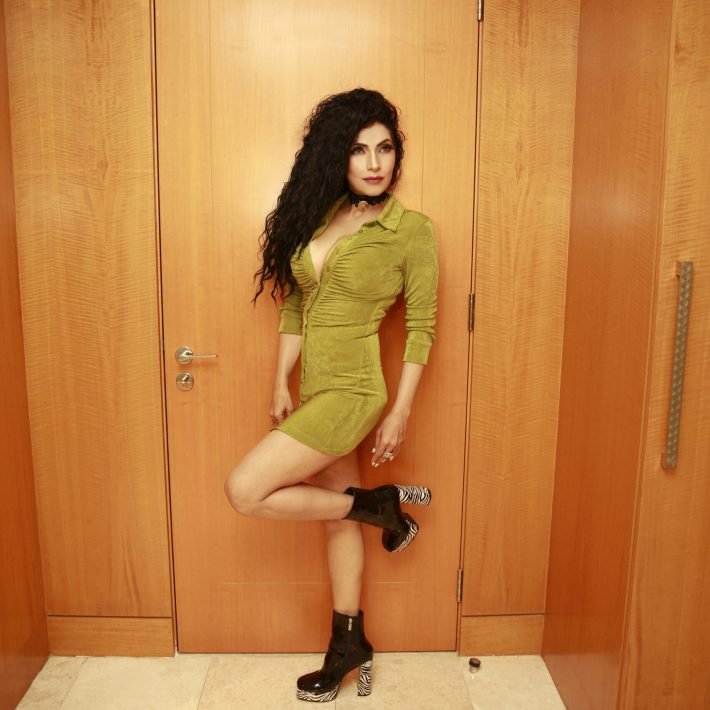

Actor, singer, author and publisher Suchitra Krishnamoorthi reflects on creativity, spirituality, motherhood, success and why peace — not fame — has become her greatest measure of fulfilment.
By Nichola Marie
What excited you most about ‘Margao Files’, and how did this role challenge or fulfil you as an actor?
What attracted me to ‘Margao Files’ was that it wasn’t trying to be safe. This project had a certain unpredictability and rawness that I found refreshing. In fact, when Kapil Kaustubh Sharma first approached me with the role of Samantha, my immediate reaction was laughter. Samantha is this glamorous, complicated woman, a bit of a seductress, emotionally entangled with two men, involved with a younger man, very much a femme fatale. I remember asking Kapil, “Why on earth have you come to me for this role?” It simply wasn’t how I saw myself. He laughed and said something I’ve never forgotten: “Suchitra, the way the world sees you is very different from the way you see yourself.” That stayed with me. I’m very glad I trusted his instinct instead of my reservations. The role pushed me out of my comfort zone and reminded me that growth often lies on the other side of discomfort.

There was also a deeply personal dimension to the project. Years ago, Kundan Shah often told me he regretted not having me sing in ‘Kabhi Haan Kabhi Naa’. Life has a curious way of completing unfinished circles. With ‘Margao Files’, I not only got to act but also contribute to the music. I’ve not only written, sung and composed the title track but also some of the other music/ songs in the project.
To see it resonate with so many viewers and break viewership records on Waves has been both humbling and validating.
Your Instagram bio describes your journey as ‘Looking for God through the arts’. What does that philosophy mean to you?

I think my entire life has been a spiritual quest disguised as a creative career. The older I get, the less certain I become about what God actually is. I don’t know that God resides exclusively in an idol, a scripture, a ritual or a place of worship. Those may be pathways for some people, but my own search has led me elsewhere. For me, God feels more like a frequency. A state of consciousness. A moment of complete alignment where the boundaries between yourself and what you are doing disappear. I’ve experienced it occasionally while singing, while writing, while painting, even in the middle of an ordinary moment when I am completely present. Suddenly there is no effort, no ego, no anxiety. There is only flow and you seem to merge with the world. It is a high unlike anything else. No external achievement, no applause, no success; no drug can replicate it. It is a feeling of being connected to something infinitely larger than yourself while simultaneously feeling completely at home within yourself. Those moments are rare, but they have been powerful enough to keep me searching. Every song, every painting, every book, every performance is another attempt to find that frequency again. To touch that state of grace, however briefly.
Looking back, what have been the defining milestones that shaped your evolution as an artist and thinker?

Oddly enough, the moments that shaped me most were not necessarily the moments the public remembers. Of course, there were visible milestones. Films, albums, books, performances. But the deeper transformations happened away from the spotlight. Motherhood changed me profoundly. Loss changed me. Heartbreak changed me. Public scrutiny changed me. Being in the public eye for decades teaches you very quickly that public opinion is fickle. One day you’re celebrated. The next day you’re criticised. If your self-worth depends on either, you’re in trouble. Starting my own publishing company has been another significant milestone. It allowed me to move from being solely a creator to becoming a curator and builder of ideas. Perhaps the biggest shift has been my understanding of success itself. When I was younger, I thought success would bring peace. Now I know peace has very little to do with success. Peace comes from alignment. From living authentically. From knowing who you are when nobody is watching. That understanding took me many years to arrive at.
What have been some of the biggest challenges in transitioning between different creative pursuits?
Every new medium has allowed me to discover another aspect of myself and another way of communicating with the world. If there has been a lesson, it has been learning to let go of the need for approval.
One of my poems expresses this better than I ever could in conversation:
“I’ve learned that their lies were merely a reflection of what lay within my inner confusion, the futility of righteousness, hurt and pain. I’ve learned to not fall prey to them again, and though convinced my anger is justified, in the end I know it’s best to be dignified. So I’ve learned to trust, do the things I must, nothing to do with them or you. It’s ashes to ashes, dust to dust, and I just do the things I have to do.”
Having spent decades in the public eye, how have your perspectives on success, fulfilment and personal growth evolved over the years?
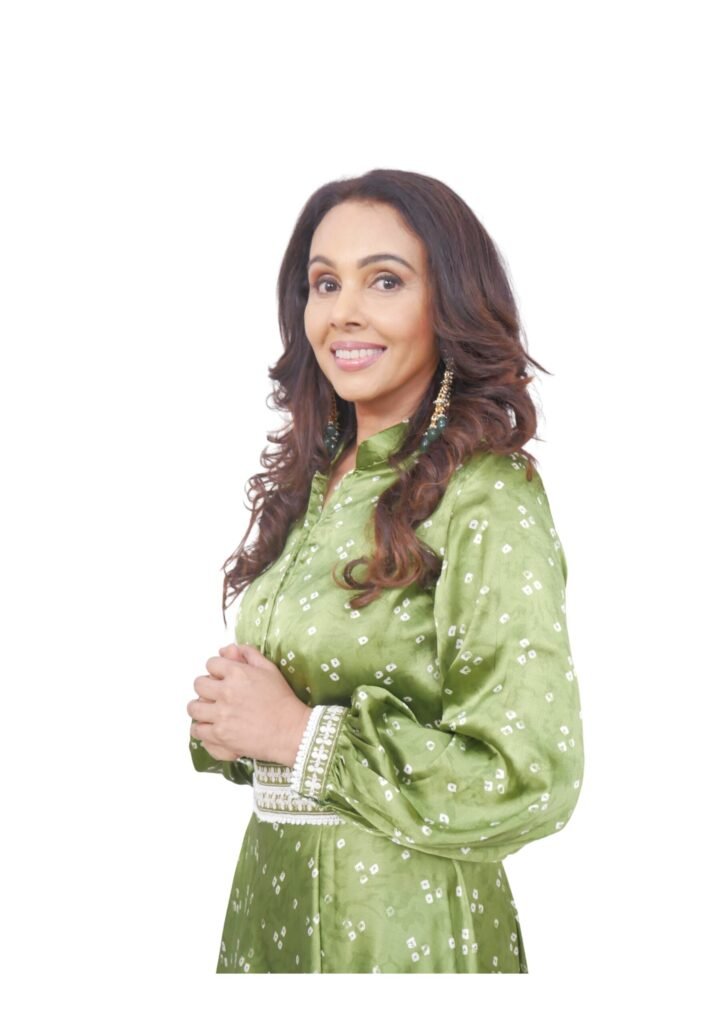
Life has a way of changing your definitions. Over the years, I have experienced an avalanche of loss. I’ve lost my parents, my sister, my brother, dear friends, my personal assistant, my beloved pets and many versions of life as I once knew it. Loss has been one of my greatest teachers. When you’ve stood face-to-face with mortality often enough, your priorities begin to shift.
The fact that I can wake up, have my morning cup of tea, watch the sunlight filter through the trees, listen to a piece of music, hug someone I love, create something new – these things no longer feel ordinary to me. They feel extraordinary.
Another dimension of success has become increasingly important to me as a mother. My daughter went through difficult experiences growing up. Like many children caught in the middle of a painful family situation, she carried burdens that no child should have to carry. Watching that unfold was heartbreaking. When I look at her today, I see an extraordinarily intelligent, sensitive and resilient young woman. Nothing matters more to me than her well-being.

Success, for me, would be seeing my daughter completely free of the shadows that may have followed her from those difficult years. Seeing her happy. Seeing her fulfilled. Seeing her embrace her own power and her own joy. Seeing her fly.
How has your relationship with your daughter shaped your outlook?
Motherhood has been the single most transformative experience of my life. Nothing prepares you for the intensity of becoming a parent. It is the most profound love and the greatest vulnerability you will ever experience. Before I became a mother, I was far more certain about many things. Motherhood taught me humility very quickly. It taught me that love alone does not give you all the answers. It taught me that you can do your best and still make mistakes. It taught me that children do not belong to us. They come through us, but they have their own journeys, their own destinies and their own lessons to learn.
My daughter has probably been my greatest teacher. She has taught me patience, compassion, resilience. Most importantly, she has taught me that real love is not about control. It is about acceptance. Watching her grow into her own person has been one of the greatest privileges of my life. What I admire most about her is her courage. Life has thrown challenges at her, as it does to all of us, and yet she continues to grow, question, evolve and find her own way.

As a parent, you eventually realise that your role is not to write your child’s story. Your role is to stand on the sidelines and cheer them on as they write it for themselves. That realisation has influenced every aspect of my life. It has made me less controlling, less attached to outcomes and more accepting of uncertainty. If there is one thing motherhood has taught me, it is perspective. The world celebrates careers, achievements and public milestones. But some of life’s most meaningful victories happen quietly. They happen in private moments of growth, forgiveness, courage and love.
Tell us more about your publishing house, The Crackajack Company.
In many ways, I feel that The Crackajack Company created itself. The journey really began with ‘108 Quotes from the Bhagavad Gita’. By then I was already known as an actress, singer and author. My novels had been published by major publishing houses like Penguin and Hachette. But I also knew that if I approached a traditional publisher with a book called ‘108 Quotes from the Bhagavad Gita’ by Suchitra Krishnamoorthi, there would probably be a certain amount of confusion. I wasn’t a spiritual guru or an academic authority on sacred texts. I was simply a seeker.
Over the years, particularly through periods of profound loss and personal upheaval, I found myself returning again and again to spiritual literature. What struck me was how much wisdom they contained and also how inaccessible they often felt to ordinary readers. I wanted to create a version of the Bhagavad Gita that felt approachable.
I believed in the book, in why I was writing it, and I decided that I would publish it myself. If the book succeeded, the credit would be mine. If it failed, the responsibility would also be mine. That one decision led to the birth of The Crackajack Company. What started as a single self-published title has evolved into an independent publishing house with over 50 titles across spirituality, wellness, personal growth, children’s publishing, activity books and humour.
As I write this interview, we are launching TheCrackajackCompany.com. One of the most surprising discoveries has been the global nature of our readership. The Crackajack Company reflects everything I value: curiosity, learning, storytelling, spirituality, creativity and the freedom to follow ideas wherever they lead. In many ways, it feels less like a business and more like the latest chapter in my ongoing search for meaning through art.